
August 7, 2026 · Michael Rodriguez

What Should Your First AI Agent Do? Pick a Real Task, Not a Demo
Skip the chatbot demos. Your first AI agent should own one repetitive, high-frequency task end to end. Here is how to pick it.
The short answer
Definition
AI Agent: A software process that perceives inputs, reasons over them with a language model, and takes actions autonomously inside a defined scope, such as reading an email, deciding a routing rule, and writing a reply, without a human approving each step.
Why do most first agents fail before they ship?
Most first agents fail because the team picks a task that sounds impressive rather than one that is actually well-defined. An agent needs a legible input, a finite set of actions, and a result you can audit in a spreadsheet the next morning.
Note
Teams often reach for customer-facing chatbots because they photograph well in a product demo. The problem is that a customer-facing surface requires near-perfect reliability, brand-safe language, and escalation paths on day one. An internal routing or triage task forgives early errors because a human catches them before any customer sees them.
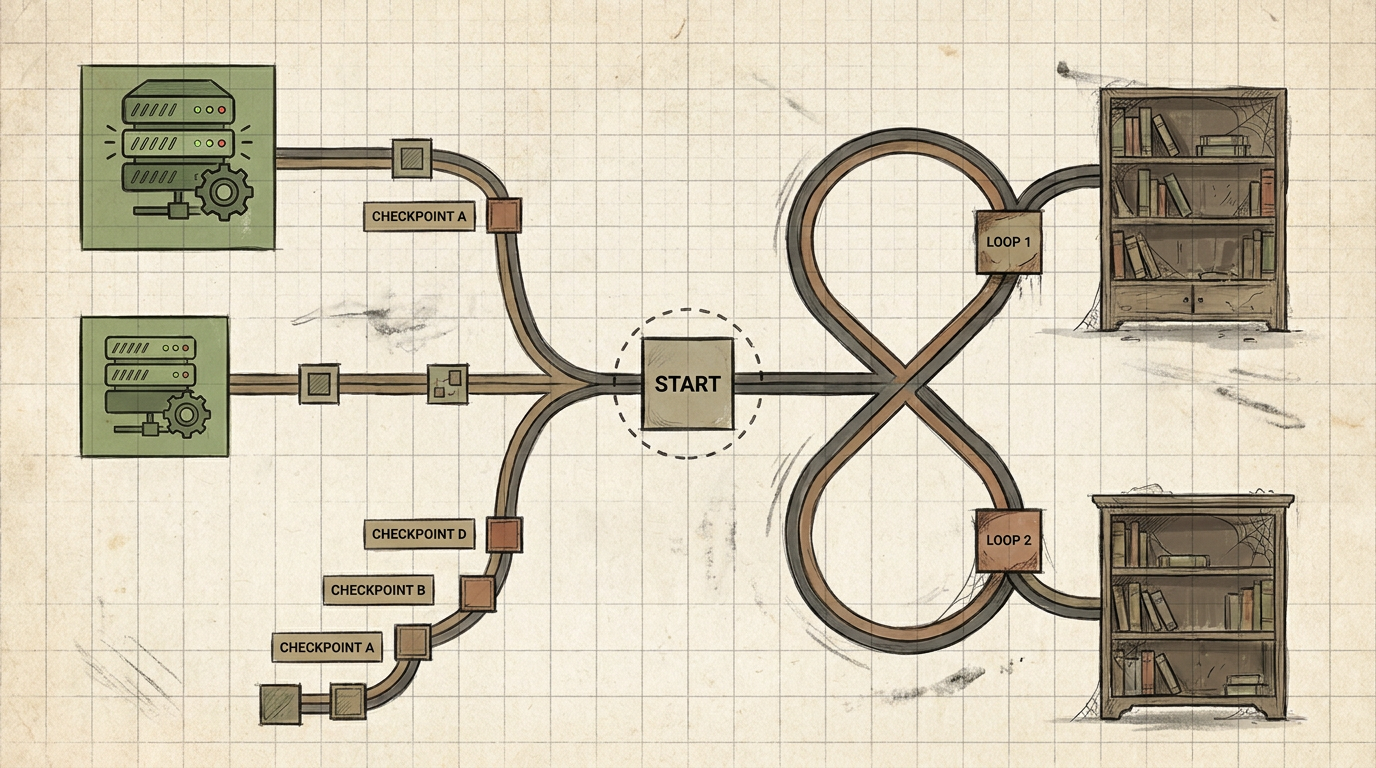
What makes a task right for a first agent?
A good first task scores well on four dimensions you can evaluate in an afternoon.
- Volume: The task happens at least once a day, ideally many times. Low volume means slow feedback loops and no real time savings.
- Legibility: Every input has a known structure, a form submission, a support ticket, a spreadsheet row, or a calendar invite. Unstructured, one-of-a-kind inputs break naive agents immediately.
- Binary-ish outcome: The correct action for each input falls into a small, enumerable set: route to sales, route to support, flag for human review, auto-reply with template A or B. The moment correct behavior requires long deliberation by a senior person, the task is not ready.
- Auditability: You can open a log the next morning and see every decision the agent made, verify it against the rule, and catch drift before it compounds.
Score each candidate task on those four dimensions from one to three. The task with the highest total is your starting point.
An agent that correctly handles two hundred routine lead-qualification emails per week is worth more than a flashy demo that wows a room but never touches a real workflow.
Which specific tasks consistently pass that filter?
Based on the four criteria above, three task categories repeatedly earn high scores for small teams starting out.
Lead or ticket routing. A new inquiry arrives. The agent reads it, classifies intent, checks a lookup table of routing rules, and drops it into the right Slack channel or CRM queue with a one-line summary. No customer ever sees the agent; a human still sends the first reply. Error rate is easy to track: wrong queue divided by total routed.
Weekly digest or report generation. The agent pulls rows from a data source at a fixed schedule, formats them against a template, and posts the result to a shared doc or channel. The human job shifts from assembling the report to reviewing it. This is a great first agent because the schedule is the trigger, the data source is the input, and the template is the success condition.
Intake form summarization. A prospect or applicant fills out a long form. The agent reads every field, produces a structured three-to-five line brief, and attaches it to the record before a human opens it. The human still decides; the agent removes the ten minutes of reading and re-reading.
How do you scope the agent so it stays in its lane?
Scope is the most important engineering decision you will make on the first build, and it is mostly a product decision, not a technical one.
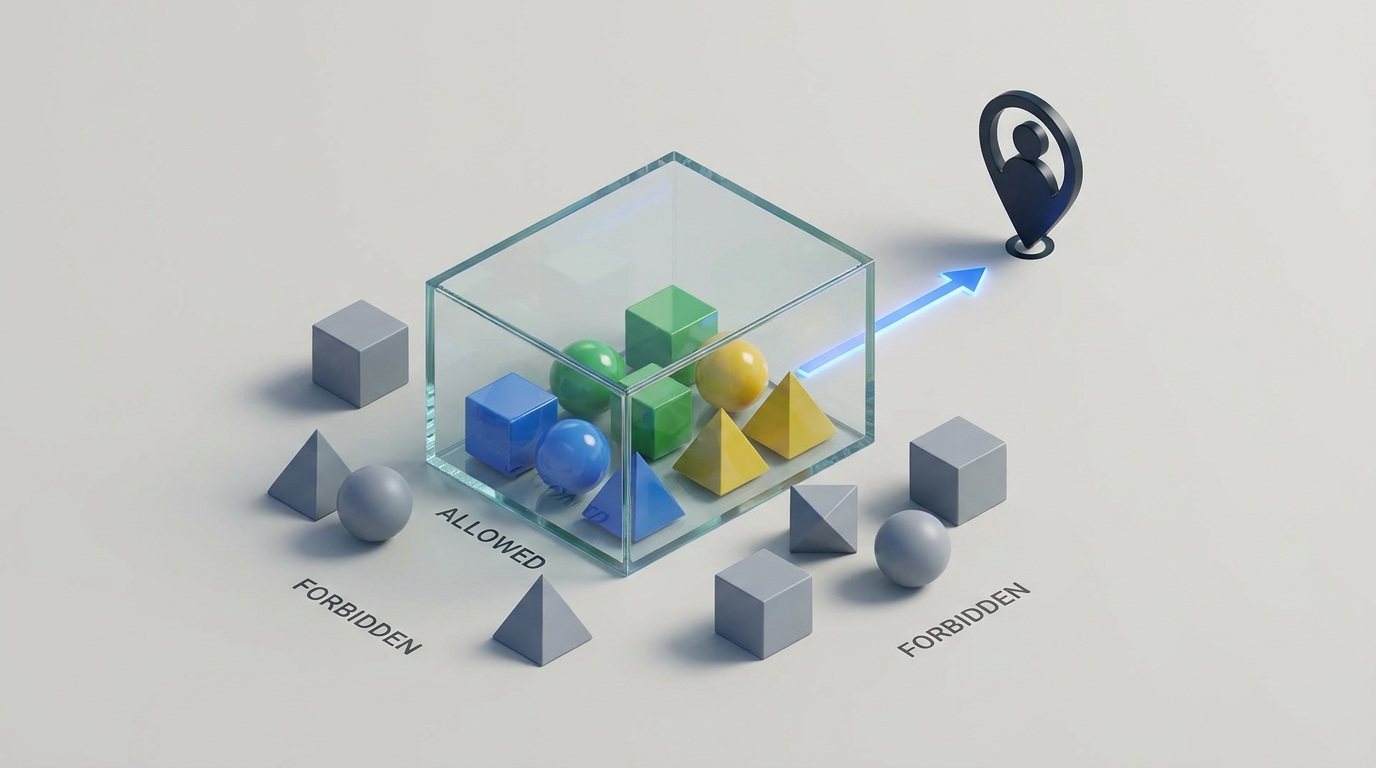
Start by writing what the agent is NOT allowed to do. It cannot send an external email. It cannot update a deal value. It cannot close a ticket. It can only read, classify, and write to an internal queue. These prohibitions are not limitations; they are the guardrails that let you ship in days rather than months.
Then define the escalation path explicitly. When the agent confidence score falls below a threshold, or when input does not match any known category, the task goes to a human-review queue. That queue should never be empty for long; an agent that gets confused and silently does nothing is more dangerous than one that visibly escalates.
For a deeper look at how multiple agents hand work to each other once your first one is stable, see the 10-agent architecture overview and the agent orchestration primer.
What does a minimal viable first-agent stack look like?
You do not need a proprietary orchestration platform on day one. The research team at Anthropic published a useful framing in their model-card and usage documentation: start with the simplest tool use loop that handles your case, add memory only when you can explain why statelessness fails you, and defer multi-agent coordination until a single agent is reliable.
A practical starting stack for internal routing or triage looks like this:
- A trigger, either a webhook from your form tool or a polling function on a shared inbox
- A prompt that includes the classification rules as a numbered list, not as vague instructions
- A structured output schema so the agent always returns a machine-readable decision, not a paragraph
- A logging table that stores input, decision, confidence, and timestamp for every run
- A weekly review ritual, fifteen minutes to open the log, spot the misclassifications, and update the rules
The weekly review ritual is the part most teams skip, and it is the part that compounds. An agent whose rules are updated weekly improves faster than one left to drift.
How do you measure whether the first agent is working?
Track three numbers from launch day, nothing more.
- Throughput: How many items did the agent process this week versus the week before it existed?
- Accuracy rate: Of the items processed, what share went to the correct destination on the first pass? Measure this by spot-checking a random sample of twenty items each week.
- Escalation rate: What percentage of items hit the human-review queue? If this number climbs, the agent is encountering cases its rules do not cover, which is useful signal to improve the prompt or expand the ruleset.
Avoid measuring time saved in hours during the first month. Your team is still building the habit of trusting the agent and you will undercount the value. Wait until the workflow is stable before you open a time-savings conversation.
Note
For reference, the Anthropic usage policy documentation and the OpenAI platform best-practices guides both recommend human-in-the-loop review for any agent making consequential decisions in a new deployment, which aligns with keeping escalation paths open. See the Anthropic responsible scaling documentation for the published framing.
Michael Rodriguez
Michael Rodriguez has spent 20 years on a dealership floor. With no tech background, he built and runs 22 production AI agents across four businesses on less than $50 a month, in evenings and lunch breaks. Agent Empire is where he ships it in public.
Building agents around a day job? Agent Empire is where operators ship it in public, together. Come build with us.