
August 31, 2026 · Michael Rodriguez

What Is the Cheapest Way to Build and Run an AI Agent?
A builder's ledger on the real costs of creating and running an AI agent, with honest notes on where to cut and where cutting breaks things.
The short answer
Definition
AI Agent: An AI agent is a software process that uses a language model as its reasoning core, connects to tools or APIs, and takes multi-step actions toward a goal without a human approving each step.
What makes an AI agent expensive in the first place?
Cost comes from four buckets: inference tokens, orchestration compute, memory or storage, and developer time. Most overspending lands in the first bucket because builders default to the largest available model for every subtask.
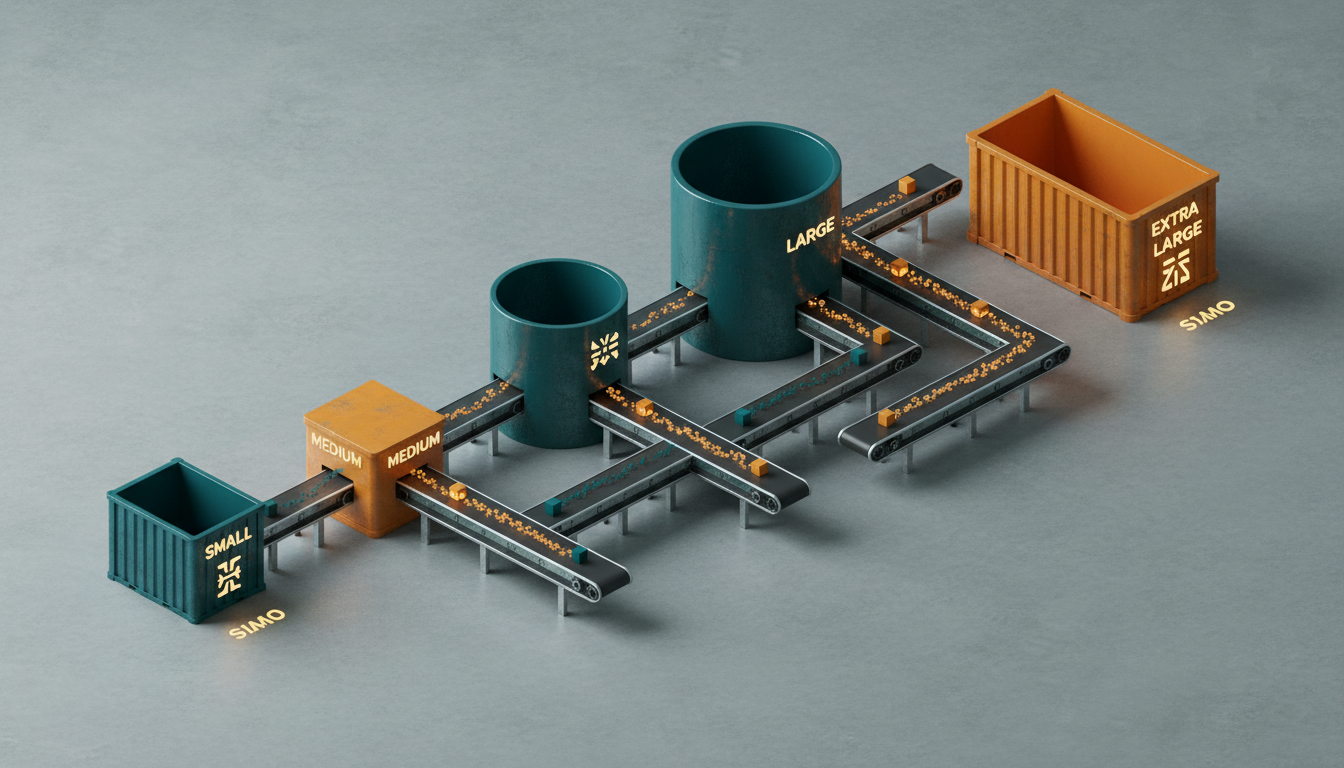
Inference pricing is per token on every major provider. OpenAI publishes its model pricing at platform.openai.com/docs/models. As of mid-2024, GPT-4o mini costs roughly 30 times less per million input tokens than GPT-4o. For routing, classification, or short summarization tasks, the smaller model is almost always good enough.
Orchestration compute is the server that runs your agent loop. If that loop polls for new work every few seconds around the clock, a 1-dollar-a-month serverless function can balloon into a 30-dollar monthly bill just from invocation counts.
Note
Which runtime architecture actually keeps costs low?
Event-driven beats polling every time. Trigger the agent only when real work arrives, let it run to completion, then stop. This single change can cut compute costs by 80 percent or more compared to a continuous polling loop, depending on your volume.
For orchestration layer, the main low-cost options in 2024 are:
- n8n (self-hosted) - free on your own server, strong for workflow-style agents
- LangGraph - open-source graph-based orchestration, runs wherever Python runs
- Flowise - open-source visual builder, free self-hosted tier
- Make.com - generous free tier for low-volume agents, per-operation pricing above that
- Zapier (AI steps) - easiest to start, most expensive at scale
If you are already exploring purpose-built agent products, see the 10-agents overview for a breakdown of what each agent type typically costs to run.
Which language model is cheapest for agent tasks?
Smaller open-weight models hosted locally or on a cheap GPU instance beat cloud API pricing at meaningful volume. For teams not ready to manage GPU infrastructure, the most cost-effective hosted options as of mid-2024 are Groq (very fast, very cheap for Llama 3 variants) and together.ai, both of which publish transparent per-token pricing.
Source: OpenAI Pricing Page, 2024
For agents doing structured extraction, classification, or short-context reasoning, a quantized Llama 3 8B model running on a 6-dollar-a-month Hetzner VPS can handle hundreds of thousands of requests per month at near-zero marginal cost. The tradeoff is setup time and maintenance.
The cheapest model is the one that is just barely good enough. Every capability tier above that is overhead you are paying for on every single call.
How do you cut memory and storage costs?
Vector databases are often the second-biggest line item after inference. For agents that need semantic search over a small corpus (under 1 million vectors), these options have meaningful free tiers:
- Chroma - fully open-source, runs in-process, zero cost self-hosted
- Qdrant Cloud - free tier up to 1GB
- Pinecone Serverless - free tier available, pay only for what you use above it
- Supabase pgvector - free tier, useful if you are already using Supabase for other data
For agents that do not need semantic search, skip the vector store entirely. A simple SQLite file or a JSON log covers a large percentage of real agent use cases and costs nothing.
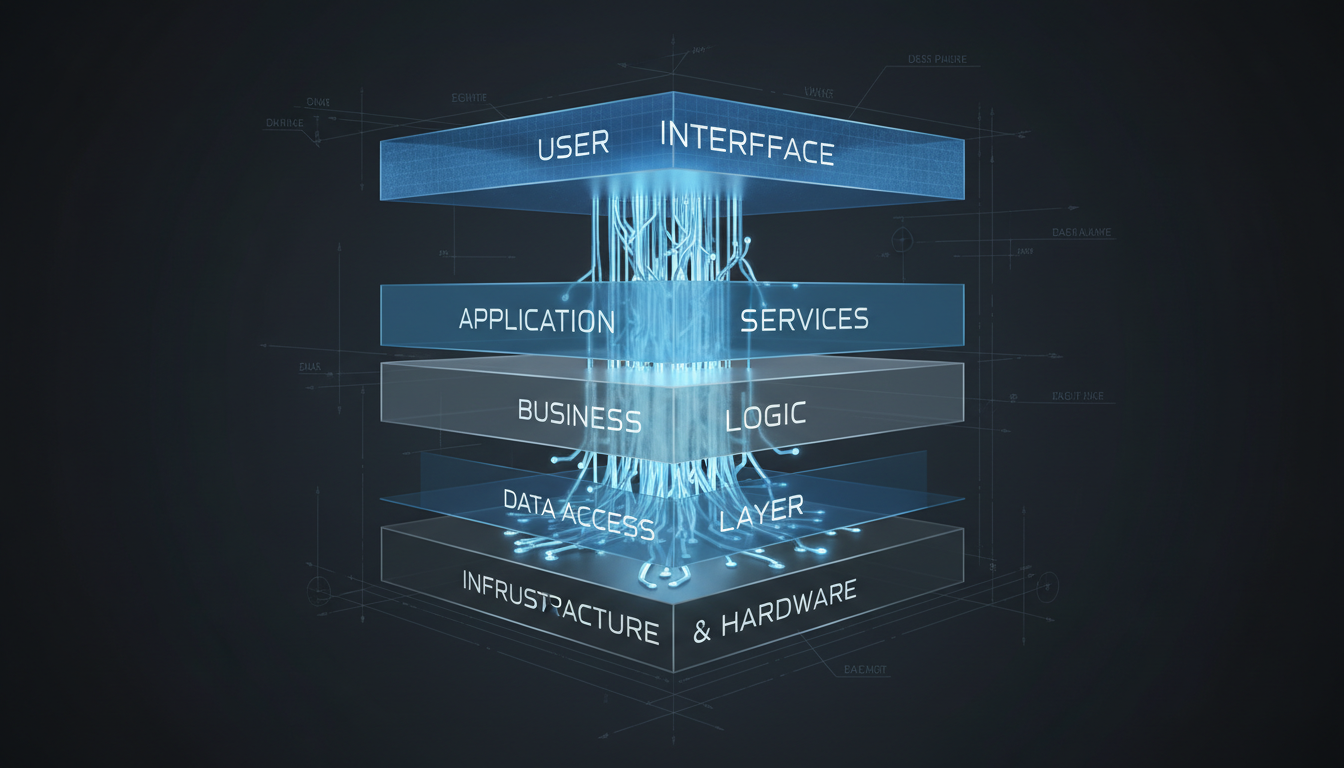
What is the minimum viable cost stack for a real working agent?
Here is a concrete ledger for a simple task agent handling, say, inbound lead qualification or content summarization at low-to-moderate volume:
| Component | Choice | Monthly Cost | |---|---|---| | Orchestration | n8n self-hosted on Hetzner CX22 | about 4 dollars | | LLM inference | Groq Llama 3 8B, 2M tokens | about 0.20 dollars | | Vector memory | Chroma in-process | 0 dollars | | Storage/DB | Supabase free tier | 0 dollars | | Triggers | Webhook via n8n | 0 dollars | | Total | | under 5 dollars |
At higher volume, inference becomes the dominant cost again. The levers are: shorter prompts (trim every unnecessary sentence from your system prompt), caching (cache the result of repeated identical calls), and batching (group multiple inputs into one API call where the model supports it).
For a deeper look at how specific agent types are priced and what they actually do, the Agent Empire blog has build notes on several production deployments.
Note
Where should you not cut costs?
Logging and observability. Running an agent without logging every LLM call, every tool invocation, and every error is how you end up with runaway costs you cannot explain and bugs you cannot reproduce. Tools like Langfuse (open-source, self-hostable) or LangSmith (free tier) add near-zero cost and save many hours of debugging time.
Also avoid cutting costs on evals. A cheaper model that produces wrong outputs more than 5 percent of the time is not actually cheaper once you count the downstream cost of bad decisions.
How does this change as you scale up?
Below a few thousand LLM calls per month, all the numbers above hold. Above that threshold, three things shift. First, inference costs become the only variable that matters, so model selection discipline becomes critical. Second, self-hosting open-weight models on a dedicated GPU starts to pencil out against API costs. Third, orchestration complexity grows, and the cost of developer time maintaining a custom stack may exceed the savings from avoiding a managed platform.
For teams building toward a portfolio of specialized agents rather than one general agent, purpose-built tooling like what is described on the 10-agents overview page can reduce per-agent build time substantially, which is a real cost even if it does not show up on an API invoice.
The field is moving fast. Pricing tables published today will be outdated in six months. The durable principle is: match capability to task, measure everything, and treat every uncached token as a cost you chose to pay.
Michael Rodriguez
Michael Rodriguez has spent 20 years on a dealership floor. With no tech background, he built and runs 22 production AI agents across four businesses on less than $50 a month, in evenings and lunch breaks. Agent Empire is where he ships it in public.
Building agents around a day job? Agent Empire is where operators ship it in public, together. Come build with us.